Confirmed facts
Open Robotics has published its technology strategy for 2026, giving the open-source robotics ecosystem a clearer set of priorities at a time when software stacks are being asked to support machine learning, edge hardware and production deployments. The 13 April announcement presents the document as guidance for projects and contributors, not as a product release or a performance report.
Source statements
That distinction matters. The strategy describes what the Open Source Robotics Alliance and the Open Source Robotics Foundation want their projects to become. It does not demonstrate that a new capability has shipped, that a robot can perform a task autonomously, or that a particular system meets a safety or production requirement. The useful question is therefore not whether the document proves a robotics breakthrough, but what it makes easier to evaluate in the months ahead.
Newsroom analysis
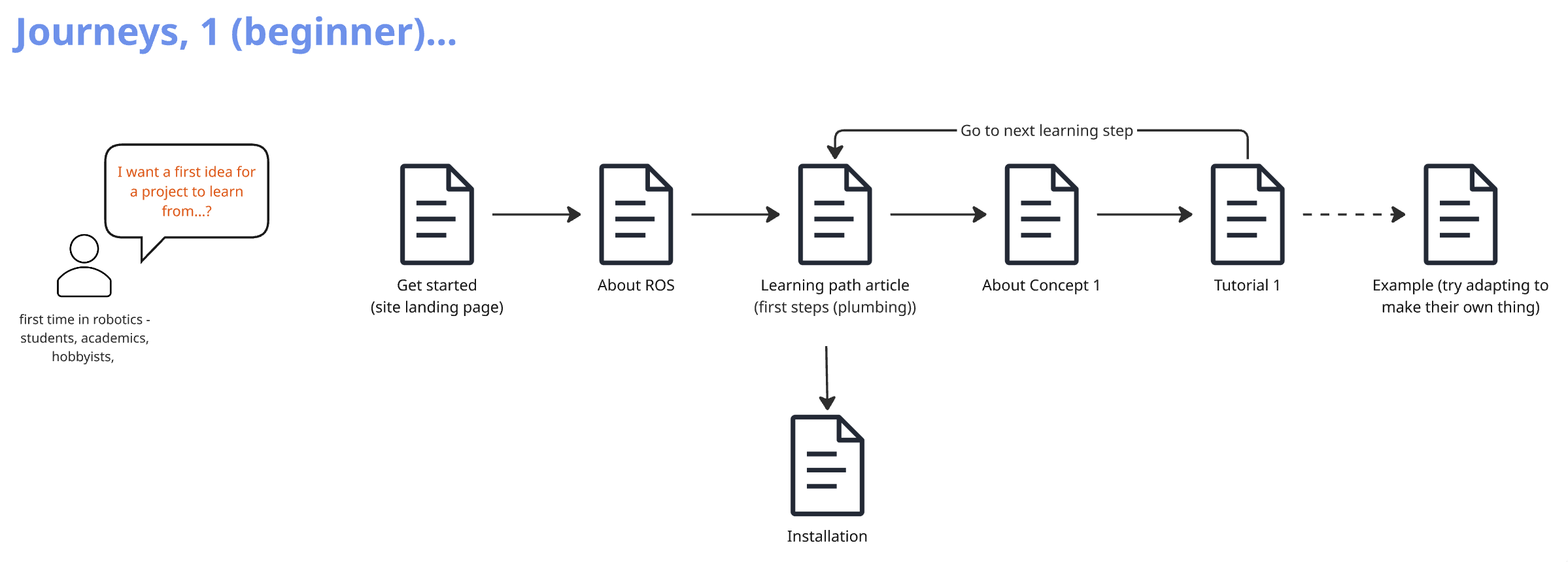
Three priorities, one broad objective The full strategy groups its 2026 work under three priorities: improving support for Physical AI, expanding accessibility and ease of use, and adopting modern tools for production systems. Above them sit two longer-term goals: trustworthy robotics software and greater agility during development. The wording is deliberately platform-oriented. Open Robotics is not announcing a humanoid, a mobile robot or a new autonomy benchmark. Instead, it is describing the software and services that research teams, educators and robot manufacturers use to build their own systems. The intended benefit is a development base that can be inspected, adapted and maintained across a product lifecycle. Physical AI is a target, not a demonstrated feature The strategy acknowledges that neural-network-based systems are changing robotics development. It says the Open Robotics suite should become a leading open-source platform for AI-driven robotic systems, including systems that run at the edge. It also argues that developer efficiency can matter as much as raw data-transfer performance: researchers need to manipulate data in ways that fit machine-learning workflows, while engineers need to understand when latency or throughput is actually limiting a system. This is a sensible engineering frame, but it remains a direction of travel. The document does not publish a benchmark, name a supported model, define a hardware target or report a completed deployment. It also does not claim that ROS, Gazebo, ros-controls or Open-RMF already provide a complete Physical AI stack. Readers should treat the language as a roadmap claim until project documentation, released packages and reproducible tests show otherwise. Documentation is part of robot reliability The second priority is less headline-friendly but highly practical. Open Robotics wants faster installation, simpler configuration and documentation that helps engineers identify the cause of unexpected behaviour. The strategy mentions package managers and newer installation mechanisms, including modern CMake, current Python tooling and Pixi, as possible ways to reduce setup friction across platforms. A related 30 March announcement says the information architecture for documentation covering ROS, ros-controls, Gazebo and Open-RMF has been completed. The next phase is implementation, content migration and filling gaps revealed during that work. Open Robotics said it expected portions of the revised documentation to appear by the end of September 2026. That is a stated expectation, not evidence that the migration is complete. For a robotics team, better documentation is not merely a usability improvement. It can shorten the path from an observed fault to a reproducible diagnosis, make configuration changes easier to review and help new contributors understand system boundaries. Those benefits still need to be checked against the actual documentation and tools as they are delivered. Production tooling means traceability as well as speed The third priority addresses the gap between a research prototype and software maintained inside a production system. Open Robotics identifies Rust, Bazel and software bills of materials as examples of modern tools that could improve reliability, transparency and supply-chain confidence. It also points to hermetically reproducible builds and more modern software sources while retaining ROS’s federated model. None of those references should be read as a certification or a guarantee. An SBOM can improve visibility into dependencies, but it does not by itself make a robot safe. A reproducible build can support auditability, but it does not prove that an application behaves correctly around people. Likewise, a new build tool can simplify deployment without resolving problems in sensing, control, networking or risk assessment. The governance layer is relevant here. In its 2025 announcement of the Robotics Enhancement Proposal process, OSRA described a unified framework for technical specifications across its projects. That offers a mechanism for turning recurring conventions into documented proposals, but proposals still require review, implementation and adoption before they become dependable practice. How to read the strategy as evidence A careful evaluation can separate four states: an aspiration, a stated priority, an implemented change and a measured result. The 2026 strategy is strongest evidence for the first two. Project release notes, documentation and repositories are needed to establish implementation. Reproducible experiments or published test data are needed to establish performance. Safety claims require the relevant risk analysis, operating conditions and applicable standards. For researchers and integrators, a useful tracking record should capture the exact claim, the project concerned, the release or commit that supports it, the test conditions and any known limitations. This prevents a roadmap sentence about Physical AI or production readiness from becoming an unsupported claim about a robot in the field. The announcement is therefore meaningful open-robotics news, but its value is methodological rather than spectacular. Open Robotics has made its 2026 software agenda easier to inspect: AI and edge deployment, accessible documentation, and production-oriented tooling. The next step is verification—watching what ships, measuring what changes and documenting where the software still stops. Official sources Official source: openrobotics.org Official source: openrobotics.org Official source: openrobotics.org Official source: openrobotics.org Related reading Amazon Proteus Pilot Europe Deployment Later Nvidia Lg Robotics Platform Simulation Factory