Confirmed facts
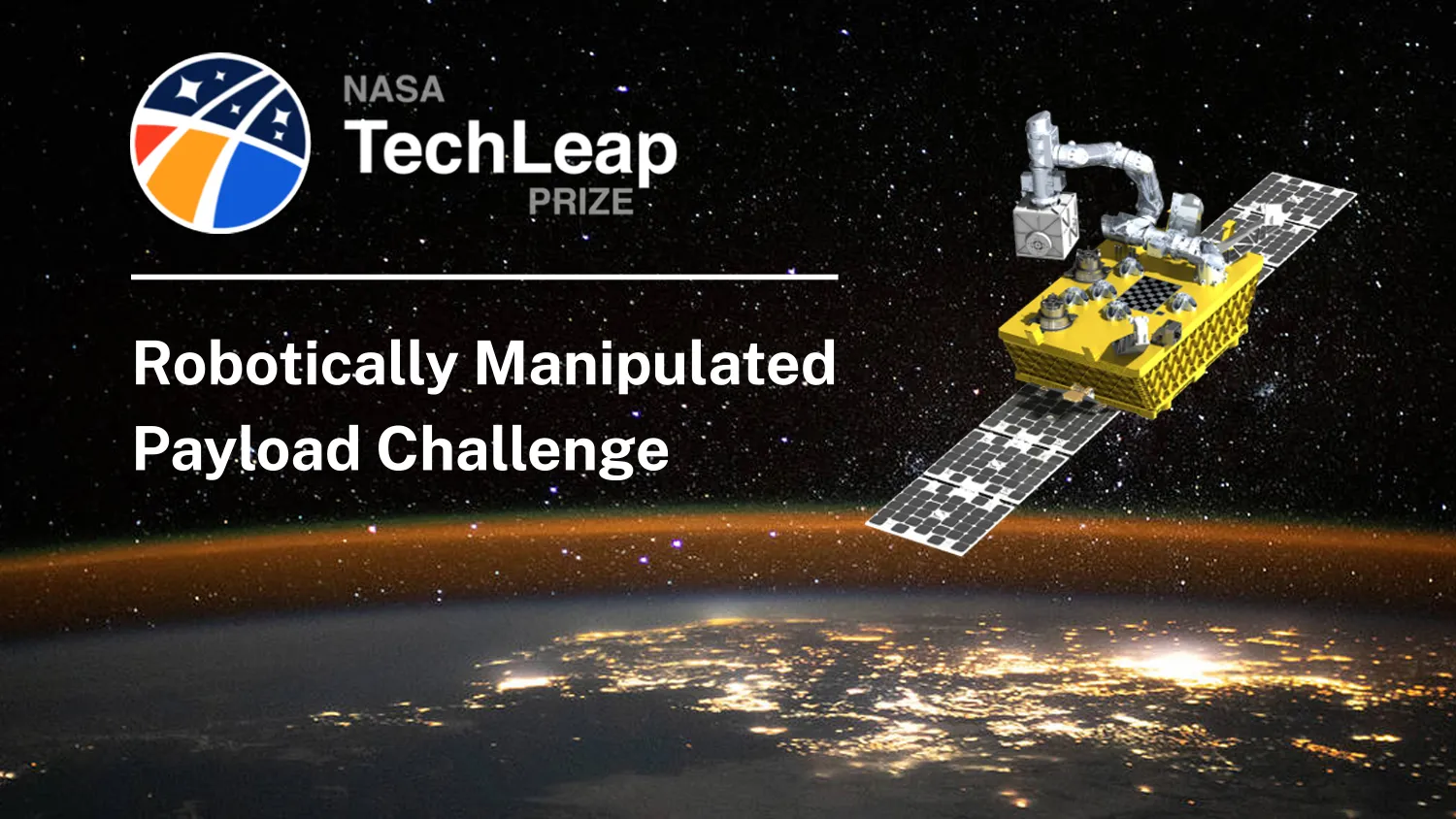
NASA announced on June 11, 2026 that AstroPix, a prototype gamma-ray sensor, will fly as part of the agency’s Fly Foundational Robots technology demonstration, currently planned for launch in late 2027. The payload gives an orbital robot a scientific job: after a robotic arm repositions a small module, AstroPix will collect data. That is a useful research result in prospect, but it is not a flight result yet. The announcement sets out a testable mission plan, not evidence that the sensor or the robot has already performed in orbit.
Source statements
What AstroPix is meant to measure
Newsroom analysis
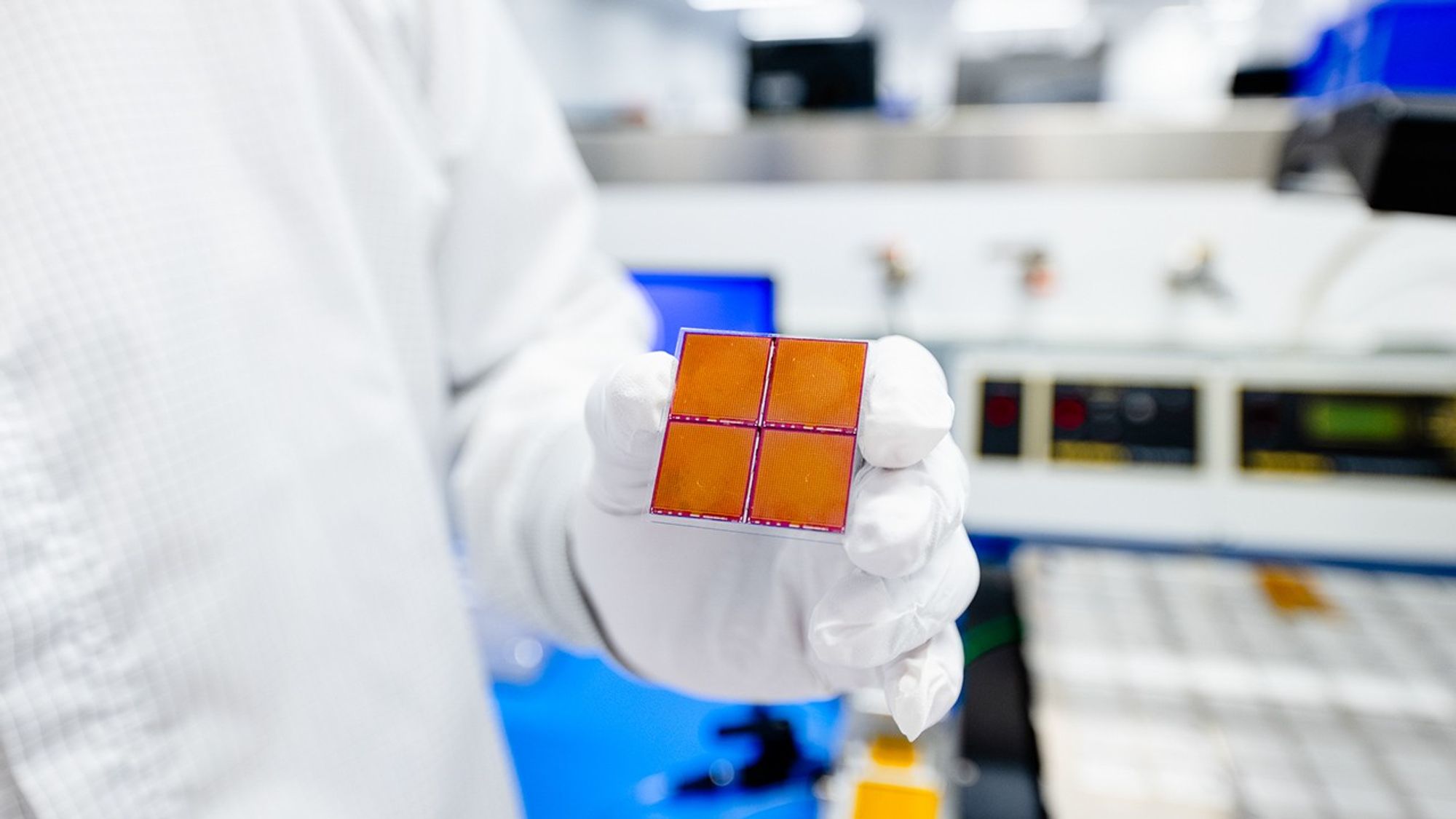
AstroPix is designed to detect gamma rays between 20,000 and 700,000 electron volts (eV). NASA says each chip contains four silicon pixel gamma-ray detectors, with 1,225 pixels in each detector. The sensors are intended to extend observations into a range where existing detectors are less sensitive: roughly 500,000 to 1 million eV. That distinction matters. A stated energy range is a capability target; it is not the same as a demonstrated sensitivity, signal-to-noise result, or science return. NASA describes a longer-term possibility of stacking AstroPix detectors in future missions to improve observations of high-energy events. The current mission is narrower: it is an in-orbit technology demonstration intended to test prototype performance before the hardware is considered for future science missions. Readers should therefore treat the detector figures as design information and the claimed scientific value as a reason for the test, not as a completed discovery. The robot’s role is deliberately specific The robotic part sits inside the Fly Foundational Robots mission’s servicing architecture. NASA says the AstroPix Satellite Technology dEmonstration Payload, or A-STEP, will be hosted in an Orbital Replacement Unit: a movable module built around an 11.8-inch (30-centimeter) cube with power and data interfaces. Rocket Lab Robotics will provide the arm that picks up and repositions the unit in orbit. Astro Digital will provide the spacecraft. In practical terms, this is a controlled changeout-style operation followed by data collection. It is not a claim that a general-purpose robot will repair an arbitrary satellite, and it is not evidence of autonomous servicing in an unstructured environment. NASA’s stated objective for Fly Foundational Robots is to demonstrate robotic payload changeout in orbit, while the AstroPix package adds a scientific measurement to the same flight opportunity. That pairing is important: the robot supplies the physical manipulation, and the sensor supplies a concrete way to evaluate the payload after repositioning. The arrangement also shows why scientific robotics often depends on interfaces as much as on the arm itself. The replacement unit already had the volume, power and data connections needed to support the AstroPix design, according to NASA. The mission can therefore add a second technology demonstration without turning the announcement into a promise of a fully general servicing platform. How to read the evidence The NASA announcement provides a clear evidence boundary. It identifies the sensor architecture, the energy range, the module size, the arm’s planned action, the participating organizations and the intended launch window. It also says the AstroPix team was working toward hardware delivery in September and that the payload would be integrated before final spacecraft integration. Those are development milestones, not acceptance-test data. What the announcement does not publish is equally important. It does not give a measured orbital detection rate, a positional accuracy for the arm, a successful end-to-end servicing run, a fault-injection result or a completed safety case. It also does not say that the mission will autonomously diagnose or correct a failed satellite. Until NASA releases those results, a careful report should avoid converting the planned demonstration into a performance claim. Safety and research limits Space operations impose constraints that do not map directly onto a laboratory robot. The arm, spacecraft, payload interfaces and command procedures must be validated as one mission system; the public announcement does not supply the detailed operational safety requirements. For researchers comparing the concept with ground robotics, the responsible lesson is methodological: define the object being moved, the interface conditions, the command authority, the allowed states and the observable success criteria before calling an operation autonomous or reliable. That same discipline applies to AstroPix. A future result should distinguish detector performance from the success of the repositioning maneuver and from the quality of the scientific data. Separating those variables makes the mission useful to the open research community even if one part of the demonstration underperforms. It gives later teams a reproducible reference point rather than another broad claim about robots “servicing” space infrastructure. What to watch next The next meaningful checkpoints are hardware delivery, integration, launch and the public reporting of the orbital demonstration. If NASA publishes data after repositioning, readers can then ask sharper questions: did the payload remain powered and connected, did the arm complete the planned motion, and did AstroPix produce data in its target energy range? For now, the verified story is more modest and more useful: NASA is using a planned robotic manipulation operation to create an orbital test for a scientific sensor, with the technical boundaries visible enough to audit. Official sources Official source: science.nasa.gov Related reading Amazon One Million Robot Network Real Deployment Limits Comau Myco Cobots Eu Prototype Validation