Confirmed facts
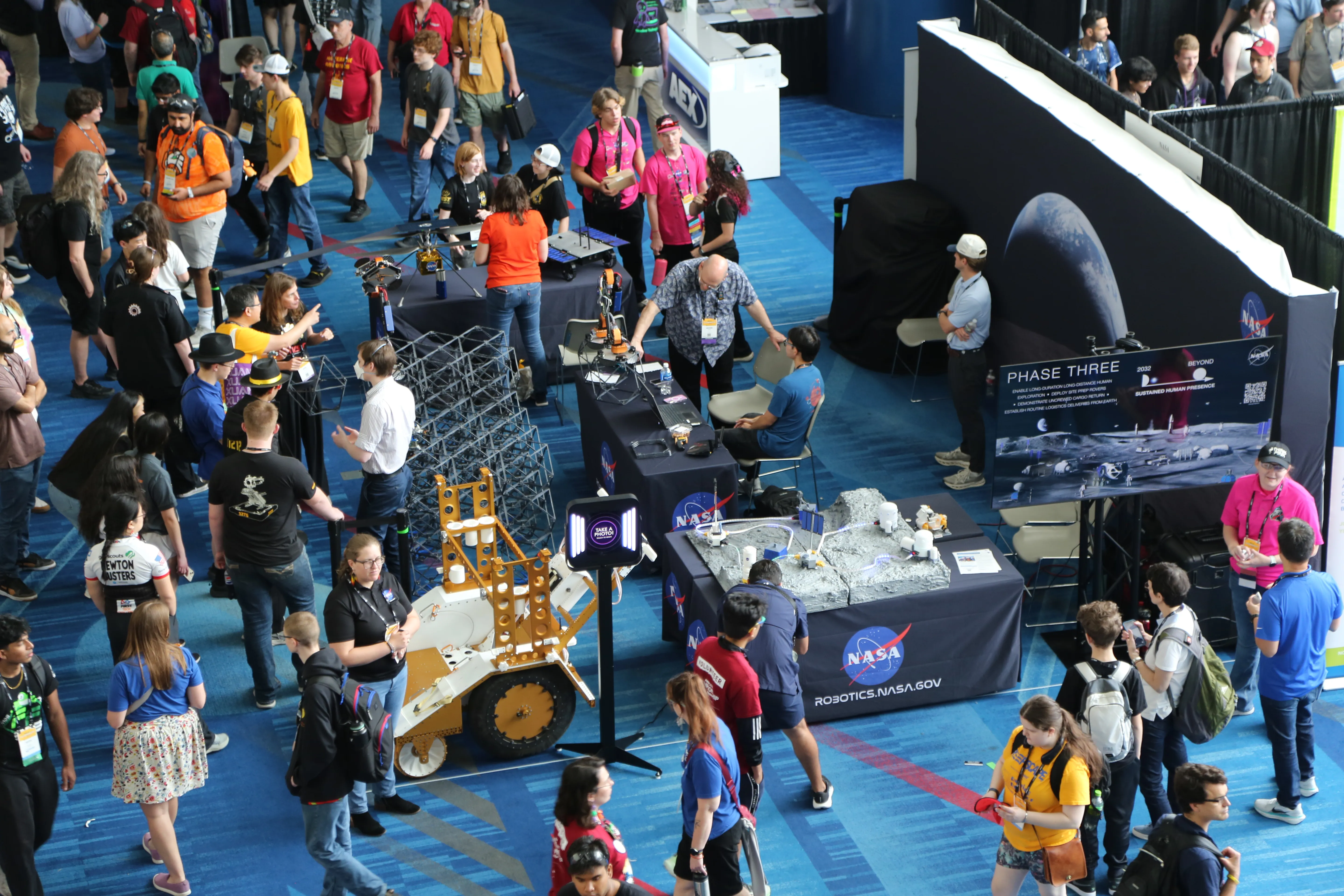
NASA’s 2026 robotics showcase placed two different research problems side by side: how robots could build infrastructure from modular parts, and how several small rovers could explore together without constant human control. The work is relevant to lunar science and future surface operations, but it is not a product launch or proof that a robotic Moon base is ready. The useful question is narrower: which capabilities are being developed, and what evidence is still missing?
Source statements
ARMADAS treats construction as a coordination problem
Newsroom analysis
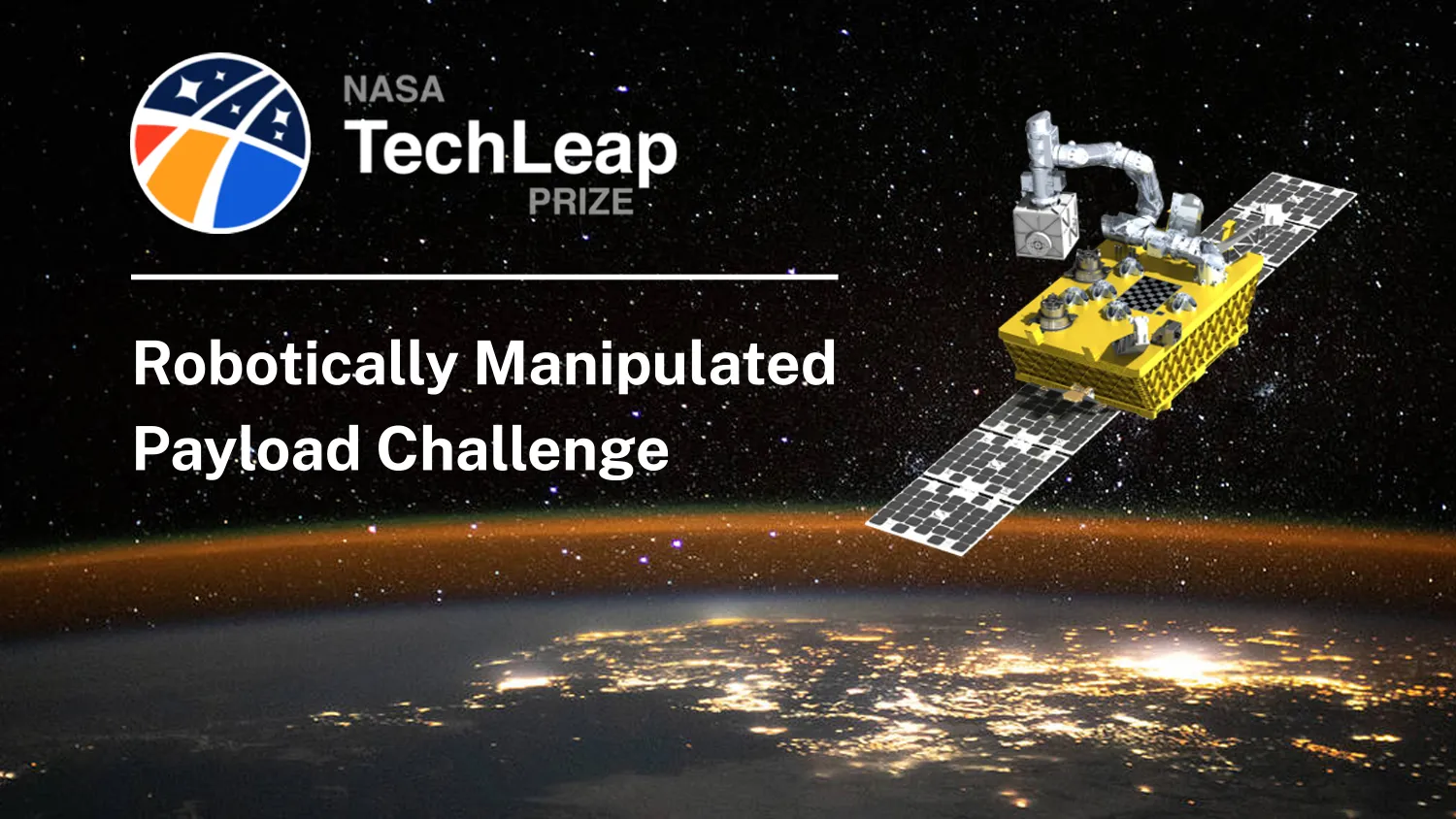
NASA’s ARMADAS project combines small builder robots, modular structural units called voxels, and software for planning paths, movements, and assembly sequences. Instead of sending a large, finished structure from Earth, the proposed approach would allow a team of relatively simple machines to assemble different structures from components delivered in a compact configuration. The engineering trade is explicit. ARMADAS moves complexity away from a single general-purpose robot and into distributed coordination, planning, and scheduling. NASA says its robots can work together on regular lattice structures through a wireless network, using the geometry of the modules to reduce the need for large positioning or measurement systems. That is a research claim about system architecture, not a statement that the approach has already built a lunar habitat. NASA’s project page describes a longer-term goal: a payload that could unpack and assemble functional systems such as a small habitat module or antenna array. It also describes possible uses for lunar infrastructure, including power, communications, and landing-site equipment. These are intended applications. The public material does not provide a lunar deployment date, a reliability rate, a dust-tolerance result, or a completed end-to-end demonstration in the lunar environment. CADRE tests whether robots can share the job The second approach is CADRE, the Cooperative Autonomous Distributed Robotic Exploration project from NASA’s Jet Propulsion Laboratory. CADRE is designed around a trio of small four-wheeled rovers that communicate through mesh-network radios with one another and with a base station on a lunar lander. The rovers are intended to make decisions and act with limited human intervention. The research value comes from distributed measurement. JPL says the rovers will use different locations to collect data that one vehicle could not gather as effectively. The system includes stereo cameras, navigation sensors, and multistatic ground-penetrating radar for three-dimensional mapping of the lunar terrain. In principle, this architecture can support exploration of risky or poorly understood areas while reducing reliance on a single robot. CADRE is listed by JPL as a future technology demonstration, with arrival planned for 2026 as part of NASA’s Commercial Lunar Payload Services initiative. The experiment is expected to run during one lunar daylight period, roughly 14 Earth days. That planned operating window matters: it defines the scale of the test and should prevent readers from treating a short technology demonstration as evidence of continuous, autonomous lunar operations. What the public evidence supports Read together, the projects show a coherent research direction. ARMADAS focuses on changing the structure of the worksite through modular construction. CADRE focuses on making several robots cooperate while sensing a shared environment. Both reduce the assumption that one highly capable machine must do everything. Both also make software central: task planning, communication, coordination, navigation, and recovery are as important as the mechanical platform. That does not mean the systems are interchangeable. ARMADAS depends on regular building units, a known assembly vocabulary, and a controlled sequence of operations. CADRE depends on reliable communication, localization, sensing, and coordination across moving vehicles. A failure in a single builder robot may be manageable if the team can route around it; a failure in the network or shared map could affect the whole mission. NASA’s public pages describe the intended capabilities, but they do not publish enough test data to compare those failure modes quantitatively. Why the limits matter For research readers, the most important distinction is between a demonstrated component and a validated mission capability. ARMADAS has publicly described builder robots and algorithms developed for autonomous assembly, while CADRE is a planned lunar technology demonstration. Neither source establishes that a complete system can operate for months, repair itself, tolerate every dust and terrain condition, or safely support crewed work. The next useful evidence would therefore be operational rather than promotional: repeatable assembly results, communication-loss behavior, localization accuracy, mapping quality, energy consumption, recovery procedures, and clear records of what happened during lunar operations. Those measurements would show whether the methods generalize beyond a demonstration environment. NASA’s announcement is valuable precisely because it exposes the research questions behind lunar robotics. Modularity may make infrastructure easier to reconfigure; multi-robot autonomy may make distributed science possible. For now, both remain carefully scoped engineering programs whose strongest contribution is a testable path toward future robotic operations, not a finished replacement for human supervision. Official sources Official source: nasa.gov Official source: nasa.gov Official source: jpl.nasa.gov Related reading Boston Dynamics Waltham Hub Real Robot Work Future Plans Kawasaki San Jose Physical Ai Hub Deployment Evidence