Confirmed facts
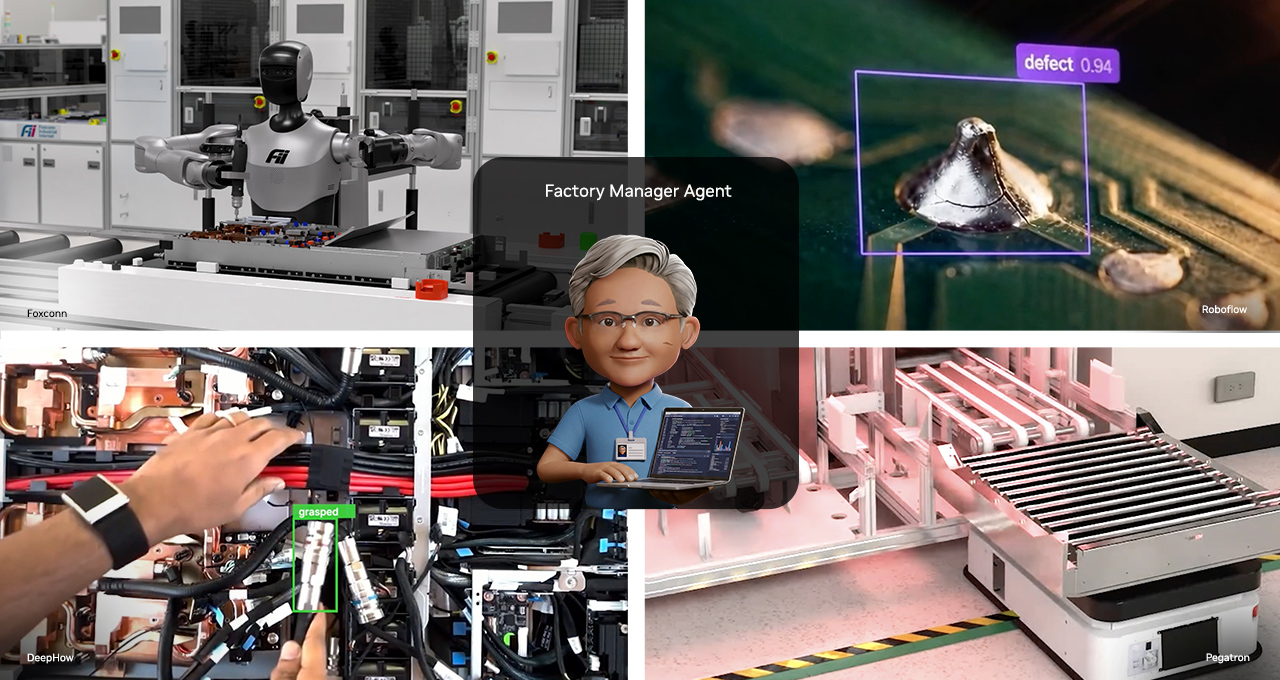
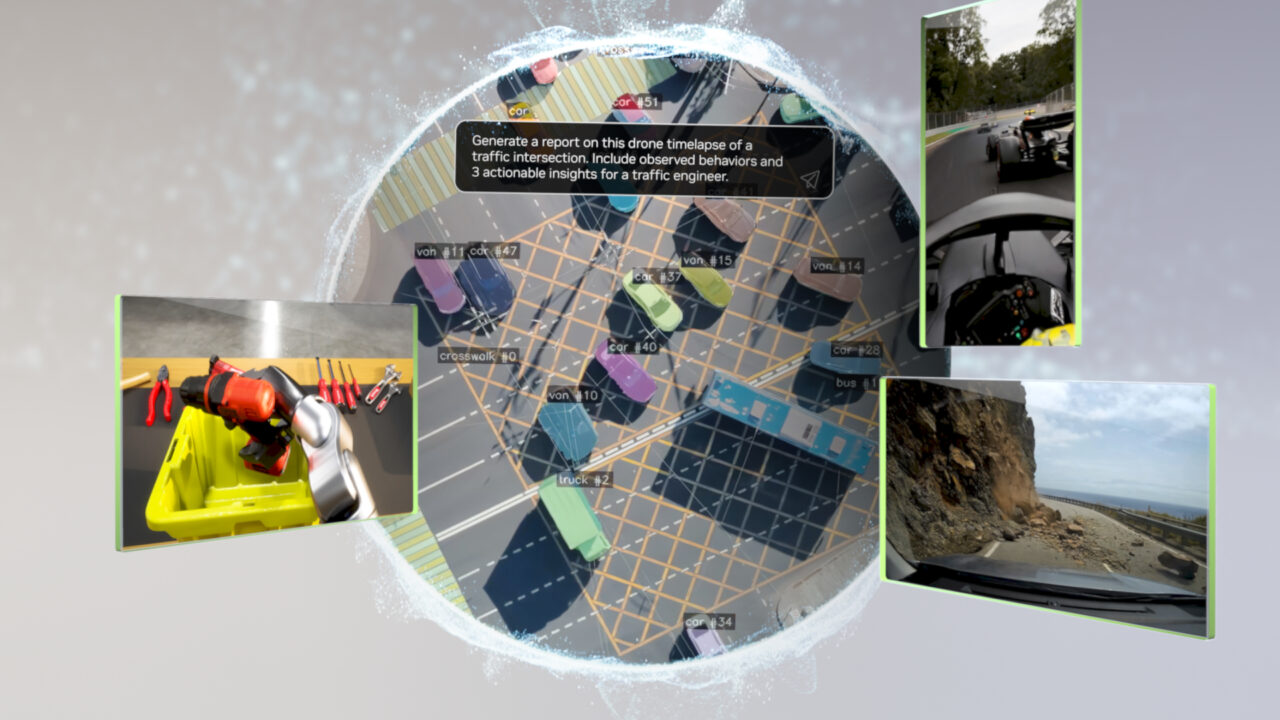
NVIDIA is positioning open world models as development infrastructure for physical AI, not as a substitute for field testing. Its latest robotics update connects the Cosmos 3 model family with Omniverse libraries and OpenUSD so teams can generate training data, simulate future states and test robot policies before exposing hardware to real environments.
Source statements
What NVIDIA is making available
Newsroom analysis
The company describes open world models as models that can be downloaded, inspected, modified and run on a team’s own infrastructure. In the robotics workflow described by NVIDIA, they are intended to learn how environments behave, predict what may happen next and help generate physically grounded world and action data. The Cosmos 3 family is presented in three sizes: Cosmos 3 Super at 64B parameters, Cosmos 3 Nano at 16B and Cosmos 3 Edge at 4B. NVIDIA says Cosmos 3 Edge is designed for on-device vision reasoning and robot-policy deployment across RTX GPUs, DGX systems and Jetson platforms, including Jetson Thor. That gives developers a possible path from workstation experiments to an edge computer on a mobile robot, provided the complete sensor, power, thermal and software stack is validated on the target platform. NVIDIA also states that Cosmos 3 is available under the Linux Foundation’s OpenMDW 1.1 license, allowing teams to post-train models on their own data and hardware. That matters for field robotics because a general model will not automatically understand a particular rover, camera arrangement, payload, terrain or communications setup. A development workflow with fewer blind spots The practical value is the connection between model adaptation and simulation. Omniverse libraries can help developers assemble simulation-ready environments, while OpenUSD provides a common way to compose and exchange complex 3D assets across digital twins, simulations and synthetic-data workflows. A team working on a site-inspection rover, agricultural vehicle or drone could use that structure to keep terrain, obstacles, sensor placements and operating conditions consistent as the system evolves. A disciplined workflow starts by recording the actual platform configuration: compute module, cameras, depth sensors, lidar, actuators, battery limits and communications link. Developers can then build a representative digital scene, vary lighting, weather, object placement and routes, and replay failure-prone situations without putting people or expensive hardware at risk. The next step should be hardware-in-the-loop or supervised testing with the real sensors and control interfaces, followed by a narrowly scoped field pilot with logging and a manual recovery path. The important compatibility question is not simply whether a model runs on an NVIDIA GPU. It is whether the model’s input formats, sensor timing, inference latency, middleware, control loop and fallback behavior match the robot. A model that performs well on recorded images may still fail when motion blur, dust, glare, vibration, packet loss or a changed camera angle appears in the field. What the announcement does not prove NVIDIA reports leading positions for Cosmos 3 on several public benchmarks, including world generation, vision understanding and robot-policy evaluation. Those results are claims made in NVIDIA’s announcement and should be read as benchmark evidence, not as proof that a particular field robot is safe or reliable in production. The post does not document a completed deployment of Cosmos 3 on a named inspection rover, agricultural machine or drone. For outdoor platforms, simulation also leaves important gaps. Terrain can change after rain, vegetation can obscure landmarks, radio coverage can disappear and a payload can alter balance or endurance. Generated scenarios are useful for expanding coverage, but they do not replace real sensor calibration, environmental testing, incident review or operator training. Safety and regulation remain separate work A simulated policy is not a safety function, and model confidence is not a safe-stop mechanism. Before a field trial, teams should define speed and geofence limits, loss-of-link behavior, emergency stop access, human exclusion zones, data logging and who has authority to take control. For drones, the operator must separately meet the applicable aviation rules, remote-identification obligations and operational risk requirements in the jurisdiction where the flight occurs. For ground robots, site owners still need a task-specific risk assessment covering pedestrians, vehicles, slopes, obstacles and recovery. NVIDIA’s open-model approach can make experimentation more portable and more inspectable, but openness does not remove responsibility for licensing, cybersecurity, model provenance or deployment approval. The most defensible use today is as a development layer that helps teams expose edge cases earlier, then carries those findings into controlled, supervised field validation. For developers building platforms that must work outside a laboratory, the announcement is useful because it connects simulation, synthetic data and edge inference in one workflow. Its central limitation is equally useful: the final proof still belongs to the robot, the environment and the safety process in which the system will operate. Official sources Official source: blogs.nvidia.com Related reading Nasa Orbital Robotics Payload Challenge Explained Digit Safety Check Humanoid Deployment Context