Confirmed facts
Apptronik is making its humanoid robotics story less about a stage demonstration and more about the infrastructure behind repeated work. In a June 30, 2026 announcement, the company introduced an expanded Robot Park facility in Austin, Texas, and said fleets of Apollo 2 robots are already collecting real-world data at Robot Park locations, customer sites and partner sites.
Source statements
That is meaningful deployment evidence, but it is not the same as proving a fully autonomous humanoid workforce. Apptronik’s announcement describes a training and data-collection operation that combines teleoperation with autonomous execution. The clearest reading is therefore narrower and more useful: Apollo 2 is being used in operational environments to generate experience for future systems, while the company continues to develop the autonomy, reliability and safety needed for broader commercial deployment.
Newsroom analysis
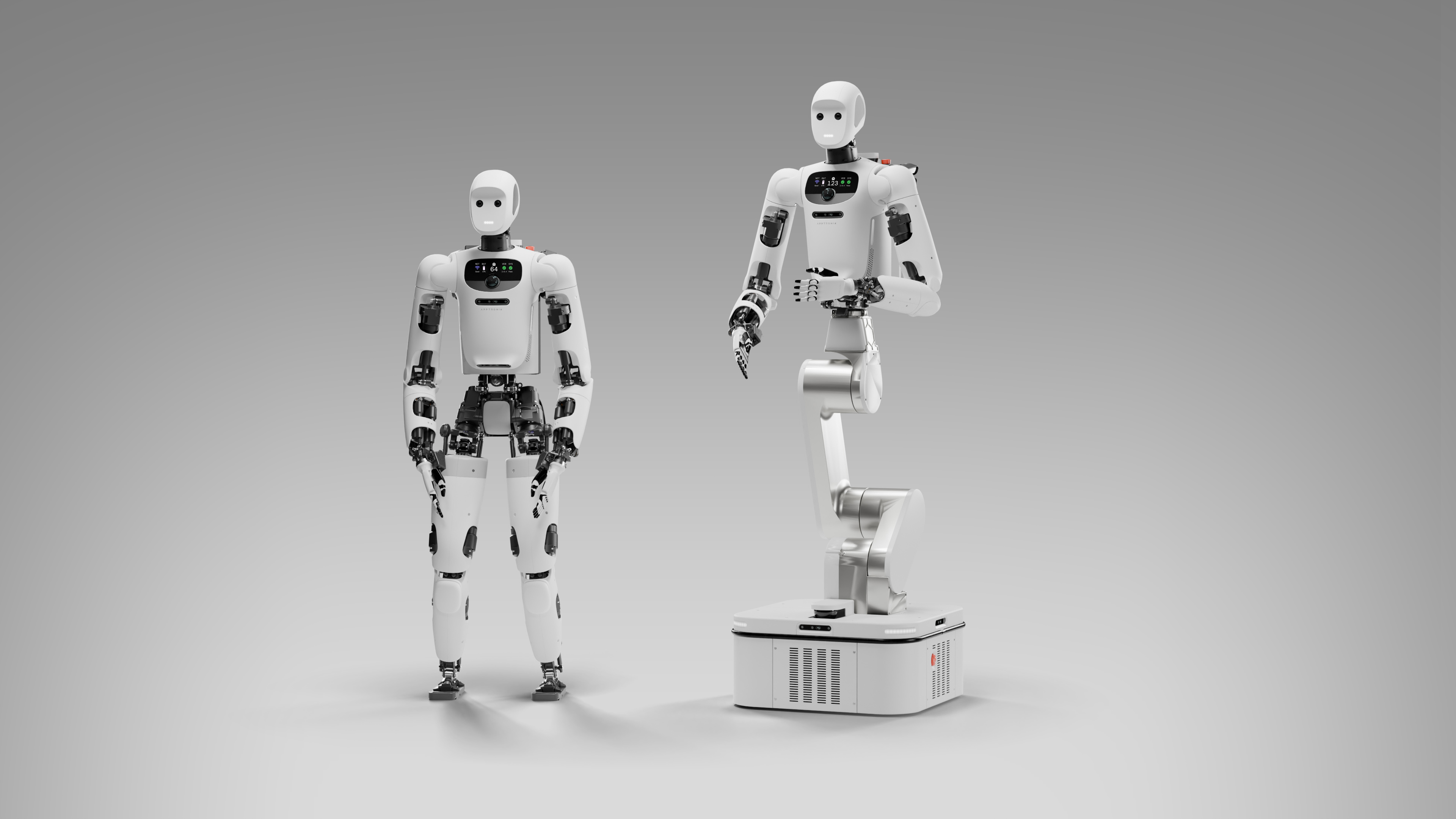
The deployment that is actually documented The newly expanded Austin facility covers nearly 90,000 square feet, according to Apptronik. The company says Apollo 2 robots work there across customer-driven use cases in logistics, manufacturing, retail and other environments. Similar data-collection workflows are also operating at Google DeepMind and at customers including Mercedes-Benz and GXO. Apptronik describes Apollo 2 as the workhorse behind Robot Park for more than a year. Its stated role is not simply to repeat a polished demo, but to gather varied physical experience that can be used to train and refine embodied-AI models. The company says those data streams support its research partnership with Google DeepMind and the development of Gemini Robotics models. For readers tracking the gap between prototypes and production systems, this distinction matters. A robot operating on a customer or partner site is stronger evidence than a controlled laboratory video. However, the announcement does not publish fleet counts, uptime, throughput, intervention rates, task completion rates or a breakdown of which tasks are autonomous. It documents an operating data pipeline, not a complete performance case study. A hybrid loop rather than an autonomy claim Apptronik says Apollo 2 generates data through a combination of teleoperation and autonomous execution. Teleoperation is not a failure; it is a practical way to collect demonstrations, recover from edge cases and improve a system before asking it to work independently. It does mean that the presence of a robot on a live site should not be read as evidence that every observed task runs without human support. The company also says it uses high-fidelity physics simulations alongside its teleoperation stack. That combination can accelerate training and hardware iteration, but simulation results should not be confused with field validation. Real facilities introduce changing layouts, variable objects, network interruptions, human traffic and recovery requirements that a controlled demonstration may not expose. Apptronik’s own framing is prospective at several points. The data collected by Apollo 2 is intended to prepare a future commercial fleet, and the company says its next-generation Apollo 3 will build on what it is learning now. No release date, price, general availability commitment or commercial performance target is provided in the announcement. Why the mobile and humanoid configurations matter Apollo 2 is presented in both bipedal and wheeled-base configurations. That is more than a cosmetic variation. A wheeled platform can stay within a predictable floor contact model and may be easier to integrate into an existing logistics workflow. Apptronik says the wheeled configuration is designed to conform with existing safety standards for industrial mobile robots. That is a company statement about design intent, not an independent certification record supplied in the announcement. The bipedal version addresses a different problem: access to environments built around human movement, steps, narrow passages and hand-operated equipment. Apptronik says the bipedal configuration provides greater adaptability for complex environments while allowing the company to refine the safety and reliability of its walking platform through real-world operation. The trade-off is implicit in the form factor. Walking expands the range of spaces a robot may reach, but it also adds balance, fall, recovery and human-proximity risks that require more supervision and more careful workcell design. That is why the most credible safety takeaway from this announcement is procedural rather than promotional. Apollo 2 is being used to collect operating experience, but the release does not provide a hazard analysis, a site-specific risk assessment, emergency-stop procedure or independent test report. Organizations should not infer that a customer-site deployment makes the robot suitable for an unsegregated workplace. What Robot Park changes Robot Park gives Apptronik a way to connect hardware changes, data collection and model development in a continuous loop. That is a more grounded commercialization strategy than relying only on impressive short videos. Repeated operation can reveal where a robot loses balance, needs an operator, struggles with object variation or requires a workflow redesign. It also creates a useful benchmark for future announcements. The next questions are concrete: how much of the work is autonomous, how often does a person intervene, what tasks are repeatable across sites, and what safety controls remain in place? Until Apptronik publishes those measurements, Apollo 2 should be understood as a deployed learning and training platform rather than a proven general-purpose replacement for conventional automation. The news is still significant. Apptronik has moved beyond a purely prospective humanoid narrative into active data collection across company, partner and customer environments. But the evidence supports a careful conclusion: Robot Park shows real operational learning in progress, while the claim of a scalable, independently capable commercial humanoid remains a future objective. Official sources Official source: apptronik.com Official source: apptronik.com Related reading Ur8 Long Long Reach Limits Factory Deployment Iveco Comau Robot Monitoring Valladolid Deployment