Confirmed facts
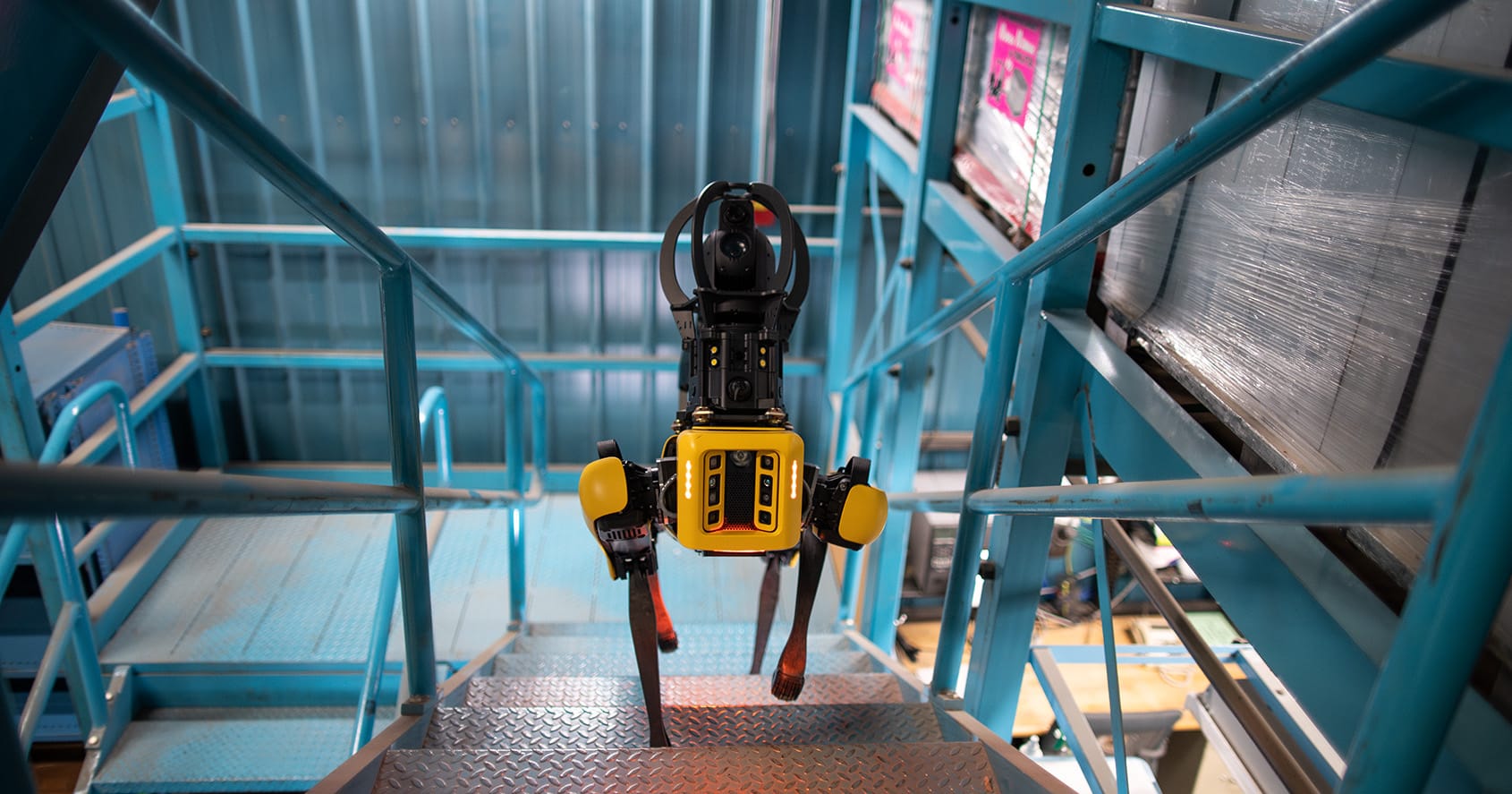
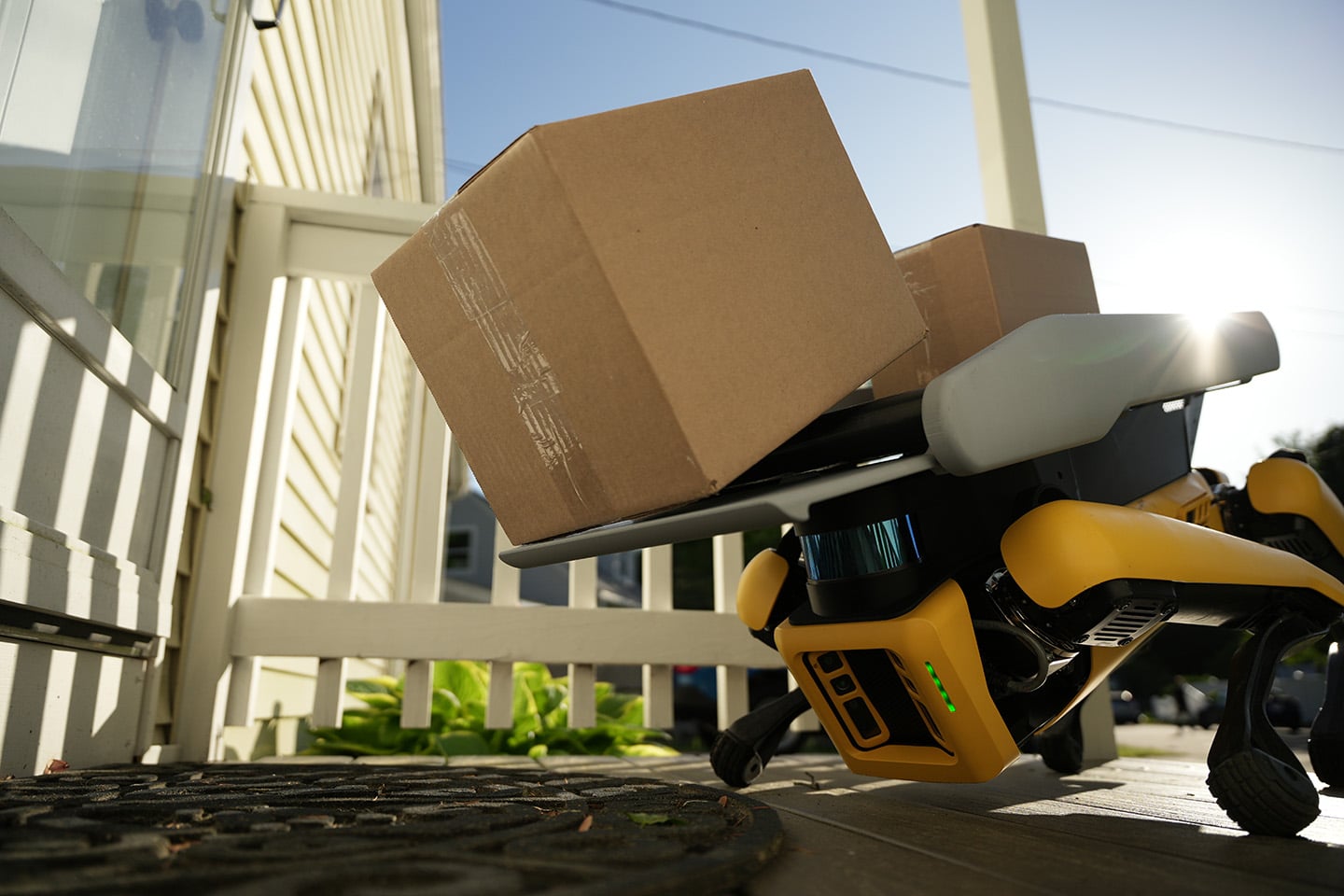
Boston Dynamics is testing a new use for Spot: carrying parcels from a delivery vehicle to suburban doorsteps. In its official account of the project, the company shows the quadruped robot leaving a van, moving along walkways, crouching at a porch and placing a package before returning to the vehicle. That is a useful demonstration of mobility and package handling. It is not evidence that Spot is already running an autonomous last-mile delivery service.
Source statements
What the demonstration actually shows
Newsroom analysis
The filmed sequence is deliberately concrete. A driver loads two boxes onto a conveyor payload mounted on Spot. The robot walks through a neighborhood, reaches two different houses and delivers the parcels with a controlled drop. Boston Dynamics says the payload is being developed to separate packages at the right stop and to reduce the speed of the final handoff. The team has also used fragile cargo, including a carton of eggs, to check whether the delivery motion can be gentle enough for ordinary goods. Those details matter because the value proposition is not a humanoid-style performance or a laboratory obstacle course. The robot is being asked to solve a narrow logistics problem: the final stretch between a delivery vehicle and a front door. The company argues that a legged platform can reach places where a wheeled robot may struggle, including steps, curbs, gravel and uneven paths. The demonstration supports that claim as a capability to investigate. It does not establish performance across a representative delivery network. The hard part is the public environment Inside a warehouse, routes, surfaces and traffic can be controlled. A residential street is different. Snow or ice, blocked walkways, sprinklers, bins, pets, children, joggers and unfamiliar porch layouts can all change the route or create a safety issue. Spot must also avoid damaging property while carrying a parcel and must behave predictably around people who have not been trained to work with robots. Boston Dynamics presents this as a higher bar than its established industrial inspection work. Spot is already used for repeatable data collection in factories and energy facilities, where the operating context is more structured and the people nearby are generally part of the worksite. Last-mile delivery would move the robot into a public setting with more variation, less control and a much wider duty of care. Where autonomy currently stops The company is unusually clear about the gap between the video and a service. Early deliveries may be conducted with the driver controlling Spot. After a route has been walked and mapped, the same address could support a more autonomous run. Boston Dynamics also says teleoperators may initially be available to intervene if the robot gets stuck. That is supervised autonomy, not unattended delivery. The video does not answer several operational questions. It does not show how the driver handles the next batch of parcels while Spot is away, how often a person must intervene, how the robot recovers from a blocked path or how it behaves when a recipient opens the door. It also does not provide a reliability rate, a completed route count, a battery plan for a full shift or evidence of a commercial customer running the workflow at scale. Those are not minor omissions: they determine whether a compelling demonstration can become a dependable logistics operation. From demonstration to proposed pilot Boston Dynamics says it is seeking logistics partners to validate the application in the field. Its stated ambition is a pilot in which Spot works with a driver and eventually handles a substantial daily package volume. That is a target for future validation, not a result already achieved. The same distinction applies to the company’s estimate that robotic assistance could let a van carry more packages. It is a planning assumption until measured across routes, weather, property layouts, interventions and the complete driver workflow. A credible pilot would therefore need to report more than successful doorstep clips. Useful evidence would include the number of deliveries attempted and completed, the share requiring human control, recovery time after failures, near-misses around members of the public, package damage, route changes and the conditions under which a driver or teleoperator must take over. It should also explain how consent, privacy and access to private property are handled. None of those questions can be answered by the current demonstration alone. The practical reading Spot has shown a plausible way to bridge the last 50 feet of delivery, and its legs give the concept a credible mobility rationale. The official material also makes the limits visible: the payload is still a prototype, the operating model is still being designed, partners are still being sought and human oversight remains part of the proposed path to deployment. For now, the news is best understood as a field-oriented demonstration with a clear research and pilot agenda. It moves the idea beyond a generic promise because viewers can see the robot load, walk and place packages. It remains short of a real-world deployment claim because Boston Dynamics has not presented sustained, unsupervised service results. That boundary is the useful takeaway: a robot reaching a porch is a capability demonstration; a safe, repeatable delivery network is a much larger system still to be proven. Official sources Official source: bostondynamics.com Related reading Omron Hw32 Cobots End Of Life Safety Migration Nvidia Open World Models Field Robot Development