Confirmed facts
Humanoid robotics coverage often jumps from a staged demonstration to a prediction about mass adoption. A quieter update from Agility Robotics is more useful for anyone trying to separate those claims: in a page dated November 24, 2025, the company says its bipedal robot Digit passed an OSHA-recognized Nationally Recognized Test Lab (NRTL) field evaluation at an e-commerce customer fulfillment site. That is deployment evidence in a live operational setting, but it is not a blanket safety certificate for every warehouse or every task.
Source statements
What was actually demonstrated
Newsroom analysis
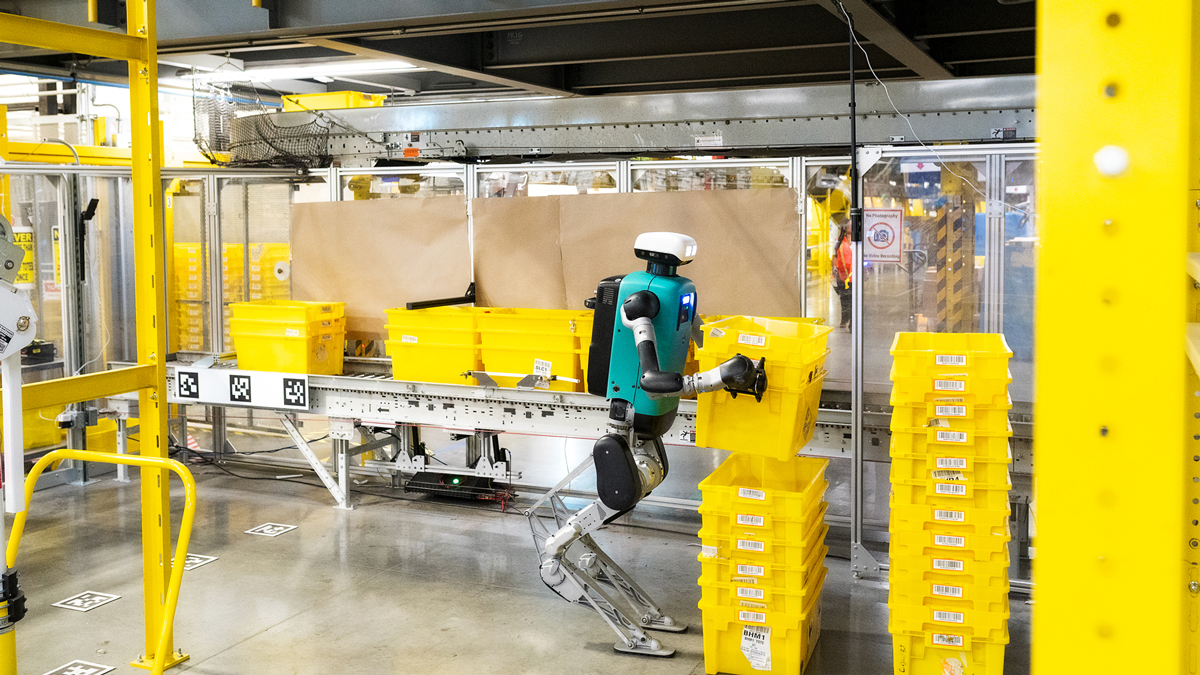
According to Agility’s official account, the assessment covered potential mechanical, shock and interaction hazards at the customer site. The company links the milestone to an expansion from automated putwalls to tote-recycling workflows. Those details matter because they place Digit inside a working logistics process rather than in a lab-only trial or a trade-show video. The announcement does not identify the customer, publish the auditor’s report, or provide cycle counts, uptime, intervention rates or a return-on-investment calculation. Those missing numbers should keep the story in the verified deployment signal category, not the proven replacement for warehouse labor category. Why this is more than a prototype story Agility describes Digit as already performing real work in actual facilities and says the field evaluation took place in a dynamic customer environment. That is a materially different claim from showing a robot pick a fixed object under controlled lighting. A facility deployment has to coexist with people, conveyors, traffic, changing inventory and site procedures. Passing a field evaluation suggests that the robot-and-workcell arrangement cleared a formal safety review for that setting. It does not show that the same arrangement can be copied unchanged to another building. The practical signal is therefore about integration. A humanoid form can enter spaces designed around human workers, but it still needs a defined task, a controlled interface with surrounding equipment and an operating envelope that a safety assessor can inspect. Agility says the approval enabled new tote-recycling applications; it does not claim that Digit is autonomous across a warehouse or capable of general-purpose work without supervision. The safety boundary is the important part The company lists standards including ANSI B11.0, ISO 12100, ISO 13849, ANSI B11.19, ISO 10218 and ANSI/RIA R15.08 as part of the compliance landscape it is addressing. That list should not be read as proof that every requirement was independently certified for every Digit configuration. Agility’s own wording is narrower: NRTL field evaluations are site-specific. The hazards depend on the robot’s software and hardware, the end effectors, the loads, the floor plan, nearby machinery and the way workers are expected to interact with the system. NRTL recognition concerns the evaluator and the assessed installation, not a universal badge attached to every future configuration. The announcement does not publish the test dates, duration, pass criteria, corrective actions or any operating restrictions that may remain. Keeping those unknowns visible is essential when a company describes a safety milestone: the existence of a formal review is evidence, but its boundaries are part of the result. For a warehouse operator, the next question is not simply whether Digit passed. It is whether the proposed task and installation match the evaluated scope. A responsible deployment would still need a local risk assessment, documented emergency stops and recovery procedures, controls for pedestrian and equipment interaction, and evidence that the system remains safe when the workflow changes. None of those checks can be skipped because a different site received a favorable evaluation. Deployment, demonstration or promise? This announcement lands in the middle of the evidence spectrum. It is stronger than a prototype claim because it refers to a customer-site assessment and named operational workflows. It is stronger than a demonstration because the safety review addressed hazards in a functioning fulfillment environment. But it remains narrower than a fleet-wide performance benchmark: there is no public duration, throughput baseline, failure distribution or independent comparison with conventional automation in the announcement. That distinction is the useful news. Digit’s NRTL result shows a path by which a humanoid can move from a compelling demo into insurable, auditable work—provided the deployment is treated as a site-specific engineering project. It does not settle whether humanoids are the best choice for a particular warehouse, and it does not remove the need for human supervision, maintenance planning or task-level validation. The credible takeaway is modest but significant: at least one customer-site workflow has cleared a recognized safety field review, while the evidence remains bounded by the conditions under which it was evaluated. Official sources Official source: agilityrobotics.com Related reading Comau Mr4weld Mobile Welding Shipyard Deployment Limits Dji Matrice 400 Field Platform Payload Safety Limits